Let’s get something straight right out of the gate.
A home theater is not a fancy living room with a big TV.
That misunderstanding alone has caused more half-baked “theaters” than I can count — especially in homes around Chattanooga, Signal Mountain, and Ooltewah where folks are trying to make one room do ten different jobs.
So before we get into speakers, screens, and surround sound, let’s slow things down and ask the right questions. Every homeowner considering a theater should answer these four things first:
-
Do I even have the space?
-
What do I actually want out of a theater?
-
What does a theater give me that my family room doesn’t?
-
Is it really worth the investment?
Let’s walk through them — no fluff, no tech jargon.
1. Do I Have the Room for a Theater?
First things first: a home theater is a standalone room with a single purpose — viewing content.
Movies. Sports. Gaming. That’s it.
It’s not a hangout space. It’s not where people sit and chat over lunch. It’s not where kids run in and out. When the lights go down, the room does one thing — and it does it well.
Now, does that take up space? Absolutely.
The ideal home theater room size is around 24 feet by 15 feet with a 9-foot ceiling. That gives you proper viewing distance, speaker placement, and sound control.
But here’s the part most folks don’t realize:
👉 That size is optimal — not required.
We’ve built excellent theaters in basements in Hixson, bonus rooms in Apison, and even converted spare rooms in Cleveland. Today’s technology allows us to work with all shapes and sizes.
The real determining factor isn’t the room — it’s the screen size and viewing distance. TVs and projectors both have recommended distances to get the best picture without eye strain. On top of that, acoustics matter more than people think.
Poor room proportions can cause sound waves to bounce and overlap, creating muddy audio where dialogue gets lost. But don’t worry — that’s where proper planning, sound treatment, and speaker layout come in.
That’s our job.
2. What Benefit Am I Actually Looking For?
This part is personal.
Ask yourself:
-
Do I like watching movies without distractions?
-
Do I want a quiet, insulated room where sound doesn’t bleed through the house?
-
Do we do family movie nights?
-
Do we host friends for the Super Bowl where every seat needs to be a good one?
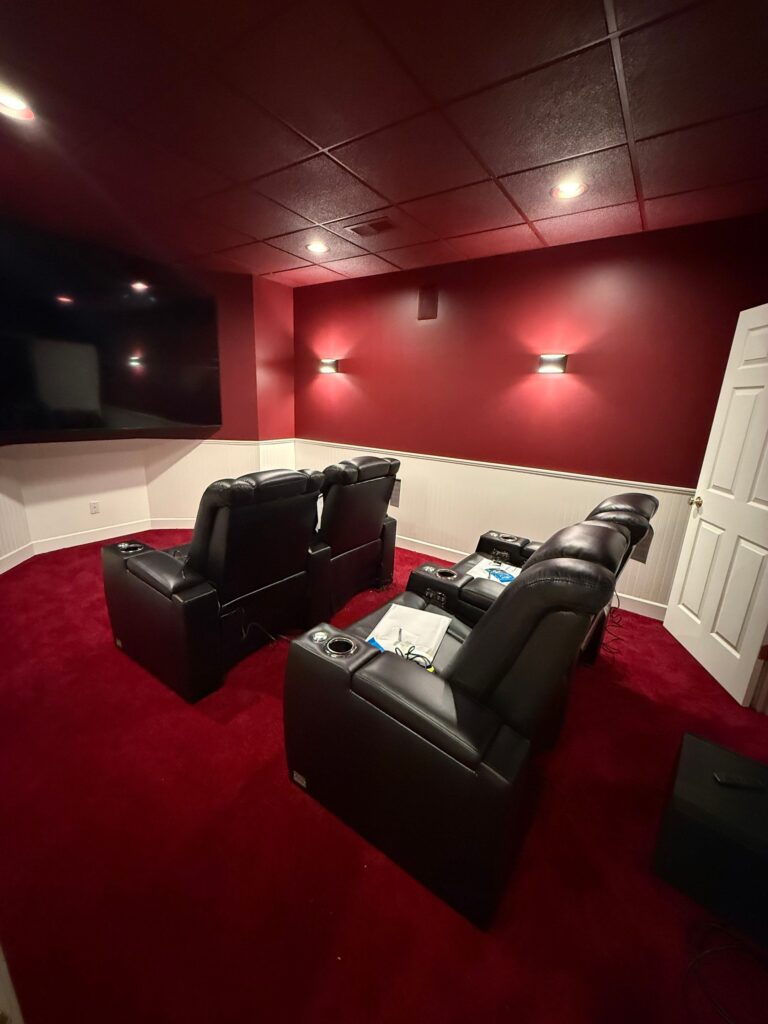
A true home theater delivers:
-
Controlled lighting
-
Purpose-built sound
-
A screen sized for the room
-
Consistency — no bad seats
And yes, it absolutely adds resale appeal, especially in areas like Chattanooga and Lookout Mountain where buyers expect homes to feel intentional and well thought out.
3. What Does a Theater Give Me That My Living Room Doesn’t?
This one’s easy.
Privacy. Quiet. Immersion.
A family room is designed for life happening around the TV.
A theater is designed for life pausing while you watch.
There’s no glare from windows.
No dishwasher humming in the background.
No competing conversations.
Just clean sound, clear visuals, and uninterrupted enjoyment.
And I’ll add something homeowners don’t always say out loud:
It creates real family time.
Not background noise. Not half-watching.
Intentional time together.
4. Is It Worth It?
That depends on how you value your home and your downtime.
I’ve built a lot of home theaters over the years — from Signal Mountain to Soddy Daisy — and I can honestly say this:
I’ve never once been asked to remove one.
And I’ve never heard, “We don’t use it.”
If entertainment, relaxation, and escape matter to you, a home theater delivers that every single day.
So… How Do You Actually Build One?
This is where things either go smoothly — or sideways.
Here’s how we handle it at Peaceful Haven Homes:
Step 1: In-Home Assessment
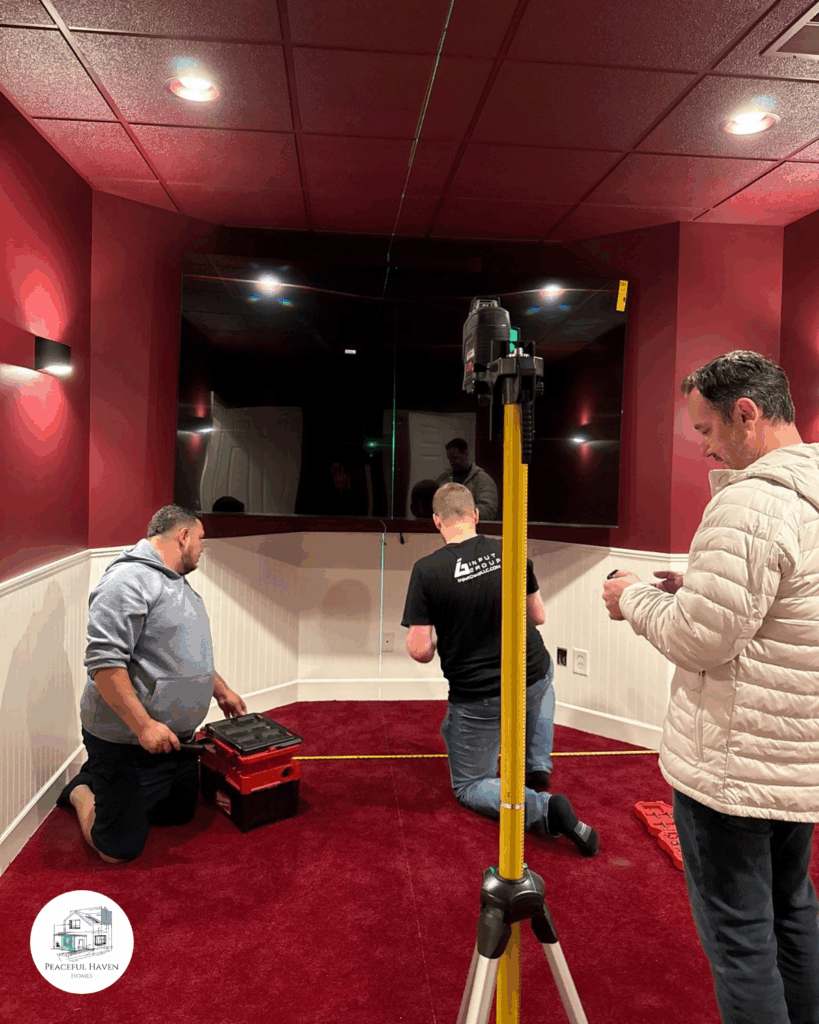
We come out, look at your home, and talk through space options — whether that’s a basement, bonus room, or unused area. We discuss budget, timing, and construction realities upfront.
Step 2: AV Planning
Our Audio/Visual partner joins the conversation to dial in screen size, sound layout, limitations, and possibilities. At the same time, we coordinate finishes, electrical, HVAC, and lighting — because all of it matters.
Step 3: One Clear Proposal
You get a single, comprehensive proposal covering everything from framing to final calibration. No juggling trades. No guesswork.
Step 4: Seamless Execution
Once scheduled, we coordinate all trades, manage the workflow, and keep disruptions minimal. Our goal is simple: get in, get it done right, and get you back to life — just with a much better place to escape to.
Final Thought
A home theater isn’t about showing off.
It’s about creating a space that works exactly the way you want it to — every time you walk in.
And when it’s done right, it becomes one of those rooms you wonder how you ever lived without.
If you’re even thinking about adding one, the first step isn’t buying equipment.
It’s having the right conversation.